
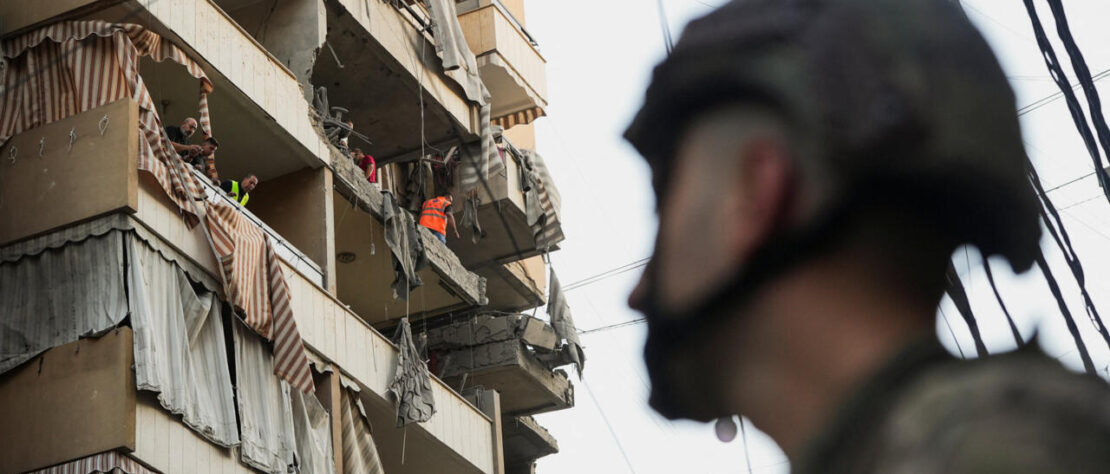
Israel carried out an airstrike in Beirut on Sunday — its first in the Lebanese capital in months — killing senior Hezbollah commander Haytham Tabtabai, according to the Israeli military. The strike targeted Beirut’s southern suburbs, a Hezbollah stronghold, and comes nearly a year after a ceasefire halted the last Israel–Hezbollah conflict.
Lebanon’s Health Ministry reported five deaths and 25 injuries in the attack. Hezbollah has not issued an official statement, though the group said earlier that the timing of the strike — days before Pope Leo XIV’s planned visit to Lebanon — risked triggering wider escalation.
Israeli Defence Minister Israel Katz said the military would continue acting “forcefully” to prevent threats along its northern border. A government spokesperson declined to say whether Washington was notified in advance, stressing that Israel “makes decisions independently.”
Who Was Haytham Tabtabai?
Tabtabai served as Hezbollah’s chief of staff and formerly led its elite Radwan Unit. The Israeli military said he oversaw the rebuilding of multiple Hezbollah units and was preparing them for renewed confrontation.
The U.S. designated him a terrorist in 2016, accusing him of directing Hezbollah’s special forces in Syria and Yemen. He was widely seen as the successor to Ibrahim Aqil, another senior commander killed in an Israeli strike in September 2024.
Hezbollah Says Strike Risks Wider Conflict
Mahmoud Qamati, deputy head of Hezbollah’s political council, said a senior figure may have been killed but would not confirm details. He warned that the attack “opens the door to an escalation of assaults all over Lebanon,” adding that Hezbollah’s leadership is assessing its response.
Residents reported smoke rising over the densely populated Haret Hreik district, and videos circulating online showed crowds gathering near a damaged apartment building. Lebanese forces later cordoned off the area as drones continued to circle overhead.
Hezbollah MP Ali Ammar insisted the strike hit a civilian neighbourhood with “no military presence.” Local resident Maryam Assaf said the attack “only gives us more determination, strength, and dignity.”
Lebanese Leaders Condemn Attack
President Joseph Aoun condemned the strike, accusing Israel of violating the ceasefire terms. He called for urgent international intervention to halt the attacks. Lebanon has denied Israeli claims that Hezbollah is rebuilding its military capabilities in the south.
Israel says it remains committed to the understandings of last year’s ceasefire, even as airstrikes in southern Lebanon have increased in recent weeks.
Growing Regional Tension
Lebanon and UN peacekeepers have criticised Israel for ongoing strikes, describing them as ceasefire violations. Aoun recently signalled Lebanon’s willingness to negotiate over Israeli airstrikes and the withdrawal of Israeli forces from several contested hilltop areas, though it is unclear if Israel will engage.
The Israel–Hezbollah war, which erupted in October 2023 after Hamas’ attack on southern Israel, left more than 4,000 people dead in Lebanon and caused an estimated $11 billion in damage. Israel suffered 127 fatalities.
Tensions escalated earlier in the week when an Israeli strike killed 13 people in the Ein el-Hilweh Palestinian refugee camp near Sidon — the deadliest incident since the ceasefire. Israel said it targeted a Hamas facility, while Hamas denied having any military presence in the overcrowded camp.